How to Start an Online Business in Kenya: Tax, Legal and Setup
Starting an online business in Kenya requires navigating tax registration, legal compliance, and several government portals. Here's exactly what you need to do and how much it costs.
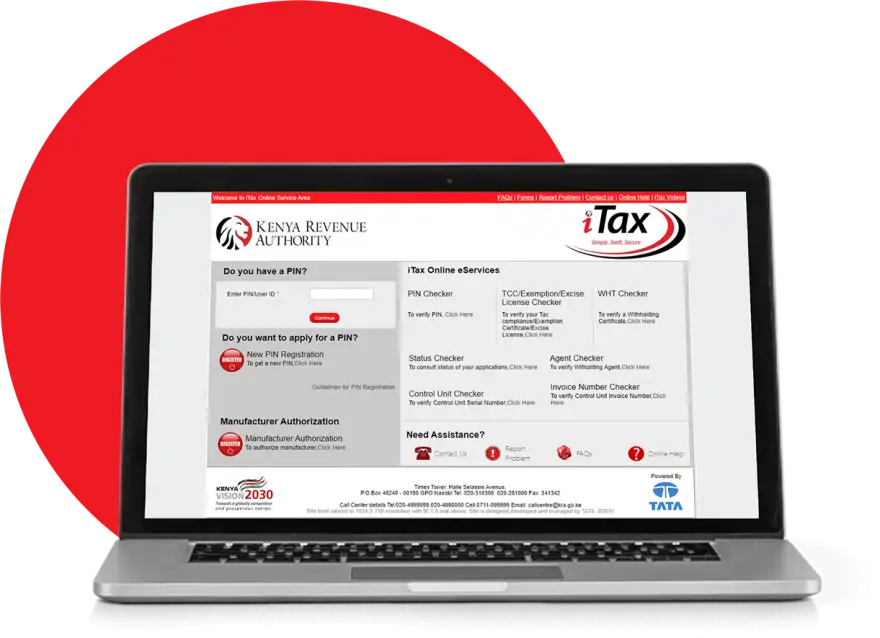
Starting an online business in Kenya means dealing with the Kenya Revenue Authority (KRA), the Registrar of Companies, and potentially multiple payment channels. The process isn't difficult, but it's thorough—and there are real costs involved.
The first step is deciding your business structure. You can operate as a sole proprietor, register as a partnership, or form a limited company. Sole proprietorship is simplest and cheapest, but a limited company offers liability protection and looks more professional to clients.
Registration and Legal Setup
If you're a sole proprietor, you'll need to register with the KRA and get a Personal Identification Number (PIN). Visit itax.kra.go.ke, create an account, and complete your KRA registration. This is free. Your PIN becomes your tax identifier for life.
For a limited company, you must register through the Registrar of Companies via ecitizen.go.ke. You'll pay KSh 2,000 for name search and reservation, then KSh 2,500 for company registration. The process takes 1–3 days online. You'll need a physical address (can be a PO box), at least two directors, and a company secretary.
Once registered as a company, you must open a business bank account. Most Kenyan banks require your company registration certificate, a utility bill showing the business address, and director identification. Business registration experts can walk you through this if you're uncertain about the paperwork.
KRA Tax Registration
Your KRA PIN is non-negotiable. Register at itax.kra.go.ke before you earn your first shilling online. The registration is free, but you'll need to specify your business activity and expected turnover. KRA checks this information, so be honest.
As an online business, you're likely subject to Value Added Tax (VAT) if your turnover exceeds KSh 5 million annually. Registration is mandatory at that threshold. VAT is charged at 16% on goods and services, though you can reclaim VAT on business expenses.
Income tax is progressive in Kenya. For self-employed people and sole proprietors, it ranges from 10% to 30% depending on your net income. Companies pay a flat 30% corporate tax on profits. KRA tax experts on Kaziiko can help you understand your exact obligations based on your business model.
Payment Processing and Banking
Most online businesses in Kenya use M-Pesa for customer payments. Safaricom's M-Pesa Business account is free to set up and lets you receive payments directly. You'll pay transaction fees (typically 2–3%), but there's no monthly cost.
If you're selling internationally or receiving bank transfers, you'll need a business bank account. Major banks—Equity, KCB, Absa—all offer online business accounts. Monthly maintenance ranges from KSh 1,500 to KSh 3,500, depending on the bank and account tier.
For e-commerce specifically, integrating a payment gateway like Pesapal or Flutterwave lets customers pay by card, M-Pesa, or bank transfer. These charge a percentage per transaction (2–3.5%) and require KRA compliance before activation.
Annual Compliance
Every year, you must file tax returns with KRA by June 30. Use the iTax portal to file. Failure to file incurs penalties starting at KSh 5,000. If you earn above KSh 5 million, you must also file audited accounts with a certified public accountant.
Keep records of all income and expenses for at least five years. KRA audits online businesses regularly, especially those processing high transaction volumes.
Frequently Asked Questions
Do I need a business license to start an online business in Kenya?
No specific online business license exists. You need KRA registration and, if applicable, a business name registration. If you operate from a physical location (office or shop), your local county government may require a trading license, typically costing KSh 2,000–5,000 annually.
How much does it cost to start an online business in Kenya?
As a sole proprietor: KSh 0 (KRA registration is free). As a company: KSh 4,500 for registration plus KSh 1,500–3,500 monthly for a business bank account. Payment gateway fees depend on transaction volume. Budget KSh 5,000–15,000 in your first month if starting as a company.
Can I use a personal M-Pesa account for my online business?
Technically yes, but KRA discourages this. Using a personal account makes it harder to track business income, and KRA flags high transaction volumes on personal accounts. Use M-Pesa Business or a business bank account from the start.
What if I don't register with KRA?
KRA actively monitors online payment platforms and bank transactions. Operating without a PIN risks fines of KSh 50,000–200,000 plus back taxes with interest. Registration takes 10 minutes and is free—there's no reason to skip it. Find a verified Kenyan expert on Kaziiko if you need guidance on your specific situation.
Find an Expert on Kaziiko